Portfolio Management
How to Trade Volatility: Understanding the VIX and Why It Is Not Just a Hedge
How to trade volatility with the VIX as an active edge, not just a hedge. A practical guide for retail traders on reading and using volatility.

I do not hold an Australian Financial Services Licence. Nothing in this post is personal or general financial advice or a recommendation in relation to any financial product. This is general educational content based on my personal experience.
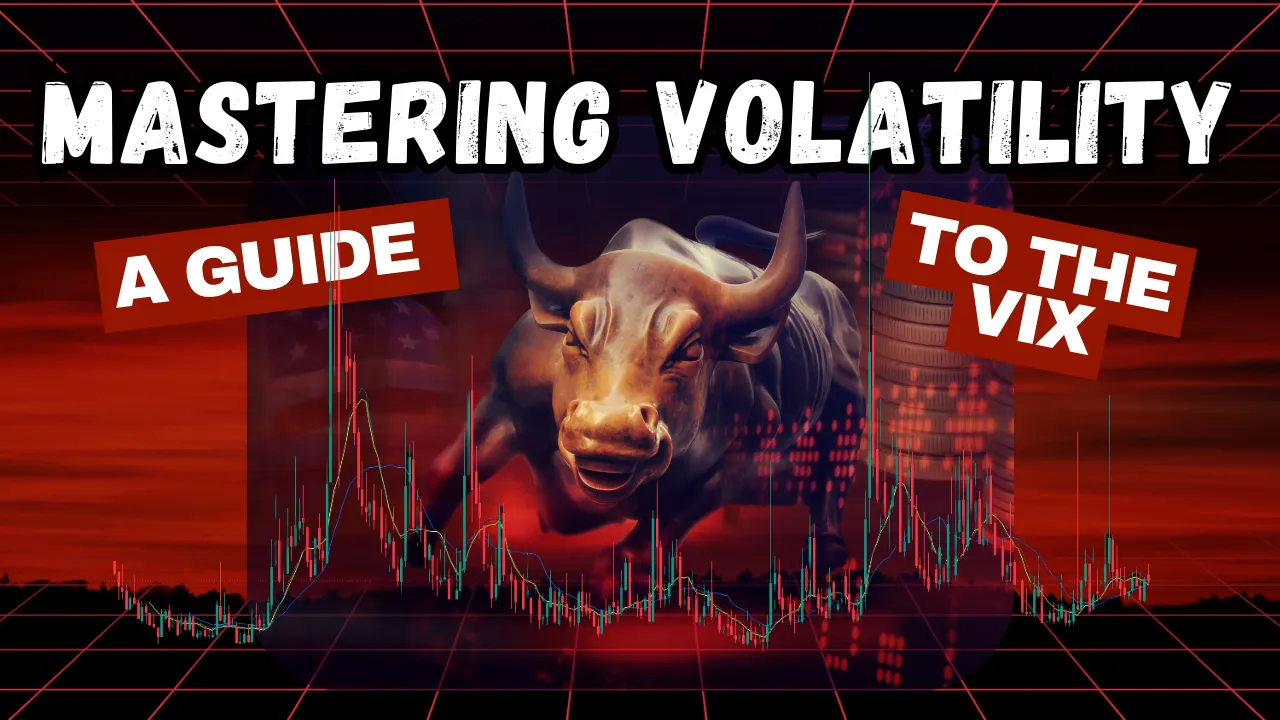
This is an educational guide to the VIX index and the products built around it. It covers what the VIX actually measures, why products like VXX are not the same as the VIX, why contango matters, and what to keep in mind if you ever think about using volatility products in a portfolio.
The short answer
The VIX is an index of expected S&P 500 volatility over the next thirty days, and you cannot buy it directly. Exposure comes through VIX futures, options on futures and ETPs like VXX, which do not behave the same as the index. In calm markets, contango creates a roll drag that has historically made long term holdings of long volatility products a drag on returns. I treat volatility as its own asset class, not a simple hedge.
What the VIX actually measures
The VIX, also called the fear gauge, is the market’s expectation of volatility over the next thirty days. It is derived from S&P 500 index option prices and published by the Chicago Board Options Exchange. A VIX reading of about sixteen implies roughly one percent daily moves are expected in the index.
Important point. The VIX is an index. You cannot directly buy the VIX itself. Exposure to the VIX can be approximated through futures, options on futures, and exchange traded products that track those futures. None of those instruments behave the same as the index.
VIX futures and volatility ETPs
VIX futures trade on the CBOE Futures Exchange. They settle to the level of the VIX index at expiry. Their price between now and expiry reflects what the market expects volatility to be at that future date, not what the VIX is right now.
Exchange traded products like VXX, UVXY and several others are built on top of VIX futures, not the VIX index. They roll futures forward as those futures approach expiry. That rolling is where most of the long term behaviour comes from.
Contango and backwardation, briefly
In calm markets, longer dated VIX futures usually trade higher than shorter dated ones. That shape is called contango. When products like VXX roll their position from a cheaper near contract into a more expensive next contract, they lose value over time even if the spot VIX is flat. That structural drag is why long volatility products tend to underperform over multi year horizons.
In stressed markets, short dated futures often trade above longer dated ones. That is backwardation. Long volatility products can benefit from rolling in backwardation. The market does not stay in backwardation for long, so the benefit is usually short lived.
What this means for retail traders
Three observations from this, framed as my own view rather than as advice.
-
Long term holdings of products like VXX have historically been a drag on portfolio returns. Many years of data show the structural roll loss outweighing the occasional volatility spike. Different traders may reach different conclusions for their own circumstances. A licensed financial adviser is the right person to help you think through whether any volatility product is suitable for you.
-
VIX correlation with the S&P 500 is not perfectly inverse. Equities can fall slowly without VIX rising much. Equities can rally while VIX also rises ahead of an event. Treating VIX as a clean inverse hedge sets up surprises.
-
Volatility is its own asset class. It has its own structure, drivers and instruments. Treating it as a switch you flip on a bad day for the market misses how it actually behaves.
Common pitfalls to avoid
-
Thinking VXX equals VIX. They do not behave the same way.
-
Buying long volatility products as a long term portfolio hedge without accounting for roll cost.
-
Ignoring the futures curve before opening a volatility position.
-
Trading without understanding path dependency. Even when the market eventually moves the way you expected, the path can leave a volatility product down.
Why structure matters
Volatility products have a structure. Understanding the structure is the difference between a tool that fits a specific use case and an instrument that quietly bleeds the account.
Even when the directional view turns out to be right, products may not behave the way you assumed. That is why education on the mechanics matters before any position is sized.
Want to understand options and volatility properly
If you want to go deeper on how professional traders frame volatility and options inside a structured framework, my ITPM reviews cover the relevant courses, particularly POTM and PTM 2.0. For the discount link, use code ptmcutts50pct on the ITPM discount page.
Affiliate disclosure. I earn a commission if you purchase through my discount link, at no additional cost to you. That does not change my view of the courses, which is based on having completed them myself.
Frequently Asked Questions
Can you buy the VIX directly?
No. The VIX is an index, so you cannot directly buy it. Exposure can be approximated through VIX futures, options on futures and exchange traded products that track those futures, but none of them behave the same as the index.
Why does VXX lose value over time?
VXX is built on VIX futures and rolls its position forward as contracts approach expiry. In calm markets, longer dated futures usually trade higher than shorter dated ones, which is called contango. Rolling from a cheaper near contract into a more expensive next contract loses value over time, even if the spot VIX is flat.
Is the VIX a perfect hedge for the S&P 500?
No. VIX correlation with the S&P 500 is not perfectly inverse. Equities can fall slowly without the VIX rising much, and equities can rally while the VIX also rises ahead of an event.
What does a VIX reading of 16 mean?
A VIX reading of about sixteen implies roughly one percent daily moves are expected in the S&P 500. The VIX is derived from S&P 500 index option prices and published by the Chicago Board Options Exchange.
Disclaimer
I am a retail trader based in Australia. I do not hold an Australian Financial Services Licence. Nothing on this website is personal or general financial advice or a recommendation in relation to any financial product. Past performance is not indicative of future results. Options trading carries substantial risk including the risk of losing the entire premium on every position. Please consult a qualified licensed financial adviser before making any investment or trading decision.
The information contained in this article is provided for general informational and educational purposes only and does not constitute financial, investment, or other professional advice. The content reflects the personal opinions of the author based on publicly available information at the time of writing and should not be relied upon as the basis for any investment decisions.
Readers are strongly encouraged to conduct their own research and due diligence, and to consult with a qualified financial advisor or licensed professional before making any investment or trading decisions. The author and publisher make no representations or warranties, express or implied, as to the accuracy, completeness, or reliability of the information provided and accept no liability for any loss or damage arising directly or indirectly from the use of or reliance on the information herein.