
.png)


The Chop Zone: Why Sitting On Your Hands Might Be The Smartest Trade Right Now
Join my free newsletter here and get it straight to your inbox.
Introduction
Let's be honest. The market just did something incredible, and now it is doing something brutal.
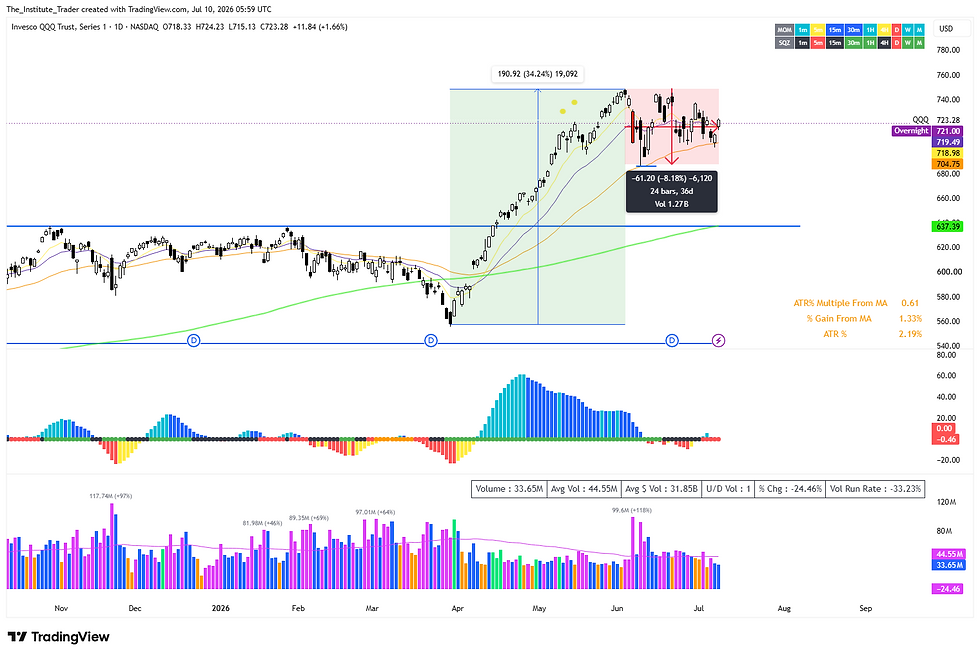
From the start of April to the first of June, the Nasdaq 100 went on an epic run. One of those moves that only comes around every few years. Then it stopped.
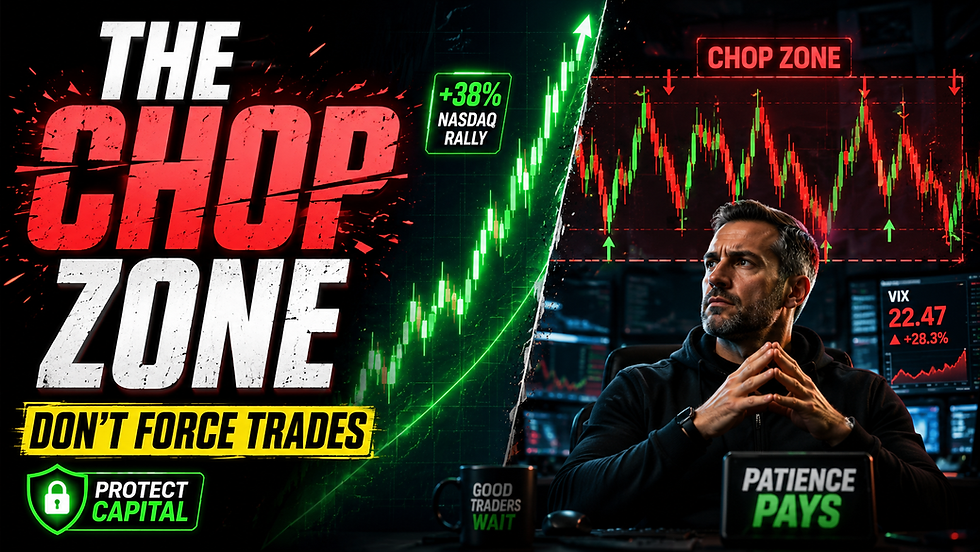
Since early June we have been stuck in what I call the chop zone.
If you have been trading the last few weeks and feel like the market is personally hunting your stops, you are not imagining it. This is a different environment. It rewards different behaviour.
Here is the truth. The chop zone is not a place to force size. It is a place to protect capital and wait. Let me walk through why.
The epic run, first
You cannot understand the chop until you understand the run that came before it.
Off the early April low, the Nasdaq 100 tore higher. It bottomed somewhere around 23,050 as the Iran conflict fear peaked and tariff noise was everywhere. Then it just went. April alone printed a gain north of fifteen percent. By early June the index was sitting at a record high just above 30,660.
That is a move of roughly thirty three percent in about ten weeks.
Let me put that in context, because the number alone does not do it justice. I ran it against the normal distribution of Nasdaq 100 returns over that kind of window. A ten week move of that size sits somewhere between three and four standard deviations from the mean. Depending on the volatility lookback you use, April on its own was close to a three sigma month.
A three sigma event is not supposed to happen often. Two of them stitched together is the kind of run that makes people feel like geniuses.
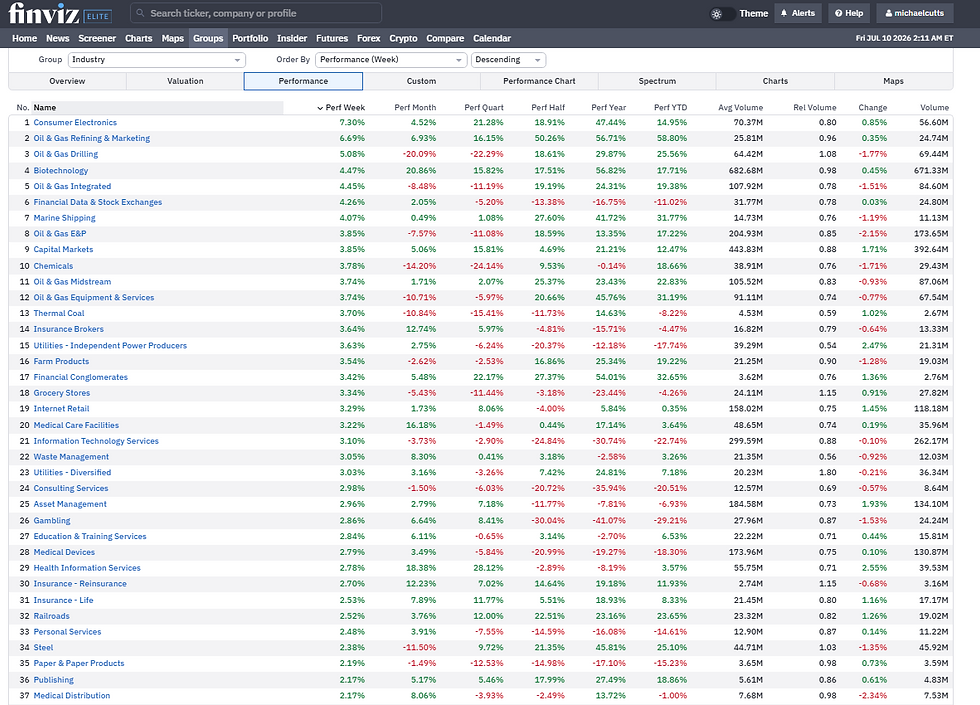
Semis led the charge. The SOX gained around thirty eight percent. Communication services and technology carried the index. The AI theme was firing on every cylinder and everyone was long.
What the chop zone actually is
Since that early June high the character of the market has flipped.
The tech sector, and specifically the AI theme trades that led everything higher, have been selling off sharply and then rebounding just as violently. Up four percent one day. Down five the next. No follow through in either direction.
This is the chop zone. The market is not trending. It is trying to establish a new cycle and it has not decided what that cycle looks like yet.
It is not a clean uptrend. It is not a clean downtrend. It just thrashes.
And that is the exact environment that punishes option buyers. You can have the right idea, put on great size, and still watch your premium get chopped to pieces while the market makes up its mind. The direction eventually comes. Your theta does not wait for it.
You are not being rewarded for conviction here. You are being taxed for it.
The cross-currents driving the chop
The reason the market cannot pick a direction is that the major narratives are all pulling against each other. Let me lay them out.
The Iran war ending. That was the big headline off the lows. The problem is it does not feel finished. It is still back and forth as Trump and the regime jockey for positioning. A ceasefire that could unravel is not the same as peace. Markets hate that kind of unresolved risk.
Rates through Warsh. Kevin Warsh is now running the Fed, and his first meeting in June leaned hawkish. Rates were held, but the projections moved higher, with the median now pointing to a higher year end than markets had penciled in. The two year jumped. The dollar had its best day in almost a year. The narrative has shifted from cuts to extended rates, if not higher rates. That is a headwind for exactly the long duration growth names that led the rally.
Sticky prices paid. The ISM manufacturing and services surveys both showed elevated prices paid. Some of that could be transitory, a knock on effect of the Iran war and the energy spike. But we do not know that yet. Until we do, it keeps the higher for longer story alive.
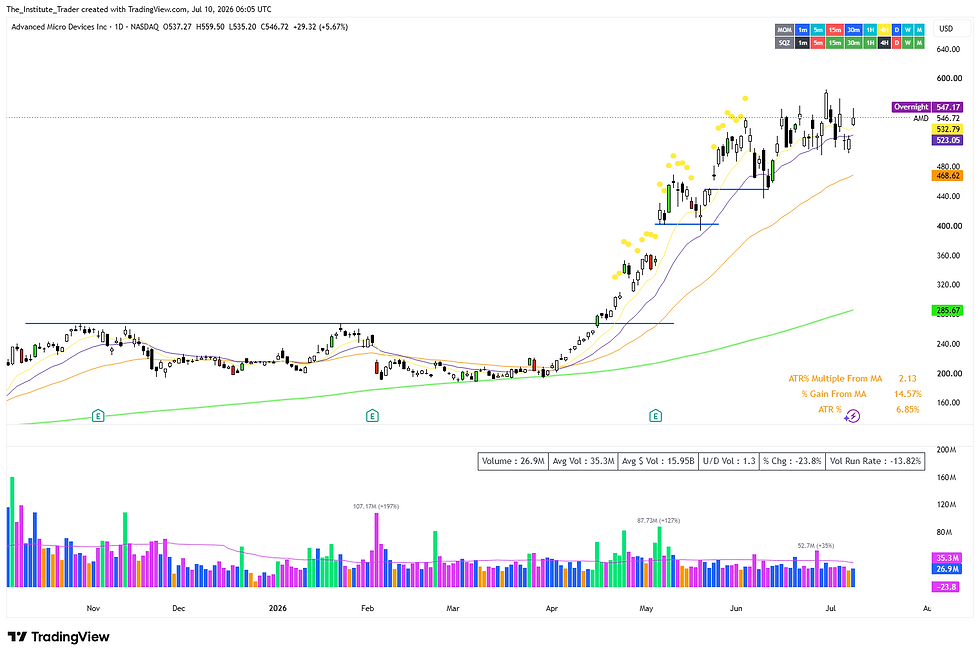
The AI capex question. This is the big one. The whole rally was built on hyperscaler capex driving extreme growth through the entire AI build out. Now that story is getting questioned. There are real bottlenecks in memory, in optics, in energy. Meta is the first hyperscaler to admit it has excess compute capacity and it is scaling parts of its spend back. The theme itself got extended
.
None of that means AI is done. It means the easy part of the trade is over.
Themes do not die. They rotate.
Here is something I have learned the hard way. A theme getting extended is not the same as a theme being finished.
Think back to before SpaceX made space investable. Space sat there as a fringe idea for years, and then a catalyst arrived and it became a real theme with real money behind it. AI is the dominant theme now, but a new one will eventually rear its head. It always does.
My job is not to call the exact top of AI or the exact birth of the next theme. My job is to still be standing, with capital intact, when the next clean trend confirms.
You are not trying to catch the last dollar of the old theme. You are trying to be ready for the first dollar of the new one.
Head scratchers and stomach churners
Anton has a seminar called Head Scratchers and Stomach Churners, and it is worth watching precisely for environments like this.
The core idea is simple and uncomfortable. Sometimes there are periods where your longs become shorts and your shorts become longs. The fundamentals you were leaning on stop driving the tape. Something else takes over.
Because fundamental analysis is not always the be all and end all of what moves markets. There are liquidity events. There are market shocks. There are broad based breadth expansions and contractions that have nothing to do with any single company's earnings.
The chop zone is one of those periods. The names are not moving on fundamentals right now. They are moving on positioning, on headlines, on money flowing in and out in waves.
Being able to identify these periods does not come from a textbook. It comes from experience, and from doing the deep dive through history. When you study how past cycles behaved, you build a map of the probable outcomes. That map is what prepares you for the next one.
That shift in how you see the market is the real edge.
What I am actually doing right now
So what does this mean in practice. Here is my playbook for the chop zone.
I am keeping my watchlist alive and updated. The names that led the rally, the names that could lead the next leg, the levels that matter. All of it stays current so I am ready.
I am not forcing trades. In a market like this it is often best to sit on your hands and wait. Waiting is not doing nothing. Waiting is a position.
I am watching for the next macro event to confirm the trend. A clear read on rates. A resolution on Iran. A real signal on whether AI capex is pausing or just digesting. One of these resolves and the market gets its new cycle. That is when I want my size on, not before.
Avoid the chop. Be ready to pounce in the environment that actually suits your process.
Why this approach works
The traders who blow up in the chop zone are the ones who cannot stop trading. They confuse activity with progress.
The traders who come out the other side with a full account are the ones who recognised the environment early, cut their size, and waited. Then they moved hard when the trend finally confirmed.
Less noise leads to clarity. Clarity leads to patience. Patience leads to the ability to strike when the setup is clean.
The chop zone is not where fortunes are made. It is where they are protected so you can make them in the next trend.
Final Thoughts
The chop zone is not exciting. It is not where the highlight reels come from.
But learning to recognise it, respect it, and wait it out is one of the most valuable skills you can build as a retail trader. The market is trying to establish a new cycle. When it does, I want to be ready with capital and a clear head.
Until then, patience is the position.
Get more awesome insights like this
If this helped you think clearly about the chop zone, there is more where it came from.
I send out a free newsletter with the same kind of breakdowns. Market reads, macro context, options lessons, and the ITPM process applied to what is actually happening right now. No noise. No hype. Just the stuff that helps you make better decisions.
Join my free newsletter here and get it straight to your inbox.
Frequently Asked Questions
What is a chop zone in trading?
A chop zone is a period where the market has no clear trend and swings sharply in both directions without follow through. Prices sell off hard, then reverse just as hard. It is common after a large move while the market tries to establish a new cycle.
Why is the chop zone so hard to trade?
Because there is no persistent direction to lean on. Option buyers get taxed as premium decays and reverses, and traders who force size get chopped up. The right idea at the wrong time still loses money.
Should I stop trading during a chop zone?
Not necessarily, but sizing down and being selective is usually the smart play. Sitting on your hands and waiting for a macro event to confirm the next trend is a legitimate strategy, not a failure to act.
Is the AI theme over?
Getting extended is not the same as being finished. There are real bottlenecks in memory, optics, and energy, and some hyperscalers are digesting their capex. That is a pause and a reset, not necessarily an ending. A new theme will eventually emerge alongside it.
Disclaimer
The information contained in this article is provided for general informational and educational purposes only and does not constitute financial, investment, or other professional advice. The content reflects the personal opinions of the author based on publicly available information at the time of writing and should not be relied upon as the basis for any investment decisions. Earnings reviews may contain forward-looking statements that are inherently uncertain and subject to change.
Readers are strongly encouraged to conduct their own research and due diligence, and to consult with a qualified financial advisor or licensed professional before making any investment or trading decisions. The author and publisher make no representations or warranties, express or implied, as to the accuracy, completeness, or reliability of the information provided and accept no liability for any loss or damage arising directly or indirectly from the use of or reliance on the information herein.


